
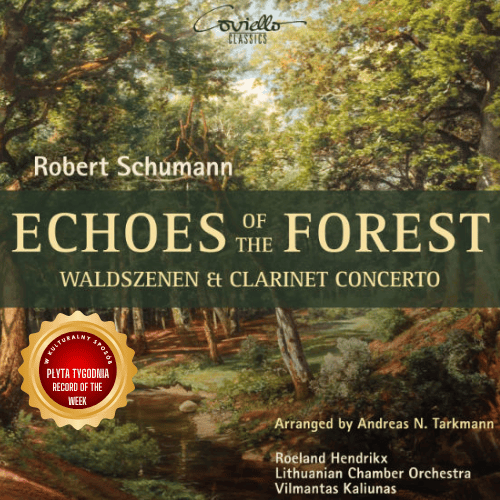
Echoes of the Forest. Robert Schumann: Waldszenen & Clarinet Concerto
Roeland Hendrikx, Lithuanian Chamber Orchestra, Vilmantas Kaliunas – direction
Coviello Classics 2026, COV92610, TT: 51’53”
(For English please scroll down)
Album Echoes of the Forest wydawnictwa Coviello Classics narodził się z odwagi. Jest jednocześnie odkrywczy, przekonujący artystycznie i wolny od znamion czysto marketingowej ciekawostki. Punktem wyjścia są dwa doskonale znane dzieła Roberta Schumanna: fortepianowy cykl „Waldszenen” op. 82 oraz Koncert skrzypcowy d-moll WoO 23. Punktem dojścia staje się natomiast fascynująca alternatywna rzeczywistość, w której muzyka niemieckiego romantyka odzyskuje nowe barwy, nie tracąc ani krzty swojej tożsamości.
Kluczową postacią projektu jest Andreas N. Tarkmann, jeden z najwybitniejszych współczesnych aranżerów muzyki klasycznej. Jego ingerencje nie przypominają jednak efektownego przemalowywania znanych arcydzieł. To raczej praca konserwatora i wizjonera zarazem, który potrafi wydobyć z partytury potencjał ukryty między nutami, a następnie ukazać go słuchaczowi w nowym świetle. Już po kilku minutach nagrania staje się jasne, że nie mamy do czynienia z adaptacjami istniejącymi „obok” Schumanna. Są one głęboko zakorzenione w jego języku muzycznym.
Schumannowski las w nowych kolorach
Największą niespodziankę przynoszą „Waldszenen”. Ten cykl od dawna zajmuje w twórczości Schumanna miejsce szczególne. Nie jest popisem pianistycznej wirtuozerii, lecz subtelnym zbiorem muzycznych obrazów, w których romantyczna fascynacja naturą miesza się z niepokojem, melancholią i przeczuciem tajemnicy. Jak przypomina autorka bookletu, las Schumanna jest jednocześnie przestrzenią marzenia, schronienia, polowania, grozy i duchowej refleksji.
Tarkmann dostrzegł w tym materiale potencjał orkiestrowy. Jego instrumentacja nie epatuje efektami. Wręcz przeciwnie. Zachwyca powściągliwością. Każda barwa wydaje się naturalnym rozwinięciem fortepianowego oryginału, jakby te utwory od początku czekały na głosy klarnetów, ciepło rogów czy dyskretny blask fletów.
Już w otwierającym cykl „Eintritt” słyszymy las nie jako ilustrację przyrody, lecz jako przestrzeń duchową. Smyczki i instrumenty dęte prowadzą subtelny dialog pełen oddechu i światła. W„Jäger auf der Lauer” pojawia się energia i napięcie, zbudowane bez przesady, za to z doskonałym wyczuciem dramaturgii. Szczególne wrażenie robi „Verrufene Stelle”, gdzie mroczne rejestry orkiestry tworzą atmosferę niemal gotyckiej tajemnicy. Równie sugestywnie brzmi „Der Vogel als Prophet”, jeden z najbardziej zagadkowych utworów Schumanna. Tutaj Tarkmann odnajduje niemal nadnaturalną paletę odcieni, pozwalając muzyce zawisnąć gdzieś pomiędzy snem a proroctwem.
Największym osiągnięciem aranżacji pozostaje jednak zachowanie intymności. Pomimo użycia orkiestry kameralnej muzyka nie traci charakteru wewnętrznego monologu. To nadal Schumann skupiony na półcieniach i subtelnych emocjach, tyle że przemawiający bogatszym, bardziej zróżnicowanym językiem kolorystycznym.
Koncert klarnetowy, którego Schumann nigdy nie napisał
Jeszcze bardziej niezwykłą przygodą okazuje się transformacja Koncertu skrzypcowego w Koncert klarnetowy c-moll. Sam pomysł mógł budzić obawy. Schumannowskie dzieło przez dziesięciolecia otaczała aura problematycznego arcydzieła: utworu późnego, niezrozumianego, długo pozostającego poza repertuarem.
Tarkmann dokonał jednak rzeczy imponującej – odnalazł w muzyce Schumanna ukrytą klarnetową naturę. W bookletowym eseju przypomniano, jak silnie ten instrument był związany z romantyczną wyobraźnią kompozytora, czego dowodzą choćby „Fantasiestücke” czy „Märchenerzählungen”.
Słuchając pierwszej części koncertu, szybko zapomina się o skrzypcowym rodowodzie utworu. Klarnet zdaje się mówić tym językiem od zawsze. Charakterystyczna dla instrumentu zdolność prowadzenia szerokiej, śpiewnej frazy wydobywa liryzm, który w wielu interpretacjach skrzypcowych pozostawał ukryty pod warstwą technicznych wyzwań. Powstało dzieło o niezwykłej kantylenie, nasycone romantycznym oddechem i naturalną retoryką.
W części środkowej Roeland Hendrikx osiąga wręcz hipnotyzującą intensywność wyrazu. Jego ton jest aksamitny, lecz nigdy sentymentalny; ciepły, ale pozbawiony słodyczy. Potrafi prowadzić melodię z niezwykłą cierpliwością i szlachetnością, wydobywając z każdej frazy znaczenie. Finał natomiast imponuje elegancją oraz lekkością. W muzyce pojawia się ruch, taneczny impuls i radość, której wykonawcy nie zamieniają w brawurę.
Hendrikx, Kaliunas i litewscy kameraliści
Sukces tego przedsięwzięcia zależy w ogromnym stopniu od wykonawców i właśnie tutaj album osiąga poziom najwyższej klasy.
Roeland Hendrikx okazuje się idealnym ambasadorem tej muzyki. Dysponuje dźwiękiem o wyjątkowej kulturze, bogatej palecie dynamicznej i rzadko spotykanej umiejętności opowiadania historii samą barwą instrumentu. Jego interpretacja nie eksponuje wirtuozerii dla niej samej. Każdy efekt techniczny podporządkowany jest narracji, a każdy ornament ma sens dramaturgiczny.
Równie imponująco prezentuje się Lithuanian Chamber Orchestra pod dyrekcją Vilmantasa Kaliunasa. Orkiestra zachwyca jednorodnością brzmienia, precyzją artykulacji i bogactwem kolorów. Kaliunas prowadzi całość z wyczuciem proporcji, unikając zarówno romantycznego przerysowania, jak i akademickiego chłodu. Potrafi wydobyć energię z gwałtowniejszych epizodów, a jednocześnie zachować przejrzystość faktury w najbardziej kameralnych fragmentach.
Delikatny epilog
Program zamyka krótki „September” Tarkmanna. Ta niepozorna miniatura nie pełni roli przypadkowego dodatku. Stanowi naturalny epilog całej opowieści. Po schumannowskich lasach i romantycznych zwierzeniach pozostaje jeszcze chwila zadumy. Kilka minut muzyki, która brzmi jak ostatni promień jesiennego światła przesuwający się po leśnej ścieżce.
Werdykt
Echoes of the Forest należy do tych nagrań, które zmuszają do przewartościowania utartych przekonań. Pokazuje, że aranżacja może być aktem twórczym najwyższej próby, a nie jedynie muzycznym kompromisem. Andreas N. Tarkmann nie poprawia Schumanna i nie próbuje go uwspółcześniać. Odsłania natomiast aspekty tej muzyki, które przez dziesięciolecia pozostawały w cieniu.
To album fascynujący intelektualnie, ale przede wszystkim głęboko poruszający. Romantyzm nie jest tu muzealnym eksponatem. Oddycha, zmienia się, przemawia nowymi głosami. A najpiękniejsze pozostaje to, że pod wszystkimi tymi nowymi barwami wciąż słychać autentyczny głos Roberta Schumanna.
Nagranie zdecydowanie godne najwyższej rekomendacji.
Robert Majewski © 2026
Albumu można posłuchać w serwisie Apple Music.
The album Echoes of the Forest, released by Coviello Classics, was born of artistic courage. It is at once revelatory, artistically persuasive, and entirely free of the air of a mere marketing curiosity. Its point of departure is two of Robert Schumann’s well-known works: the piano cycle Waldszenen, Op. 82, and the Violin Concerto in D minor, WoO 23. Its destination, however, is a fascinating alternative sound world in which the German Romantic’s music acquires new colours without losing the slightest trace of its identity.
The key figure behind the project is Andreas N. Tarkmann, one of today’s foremost arrangers of classical music. His interventions, however, bear no resemblance to a showy repainting of familiar masterpieces. His approach is closer to that of a conservator and visionary in one: someone capable of uncovering the potential concealed between the notes of a score and bringing it into a new light. Within the first few minutes of the recording, it becomes clear that these are not adaptations existing somehow “alongside” Schumann. They are deeply rooted in his musical language.
Schumann’s Forest in New Colours
The greatest surprise comes with Waldszenen. The cycle has long occupied a special place in Schumann’s output. It is not a display of pianistic virtuosity, but a subtle collection of musical tableaux in which the Romantic fascination with nature mingles with unease, melancholy, and an intimation of mystery. As the booklet essay reminds us, Schumann’s forest is at once a realm of dreams, refuge, hunting, dread, and spiritual reflection.
Tarkmann recognised the orchestral potential of this material. His instrumentation never resorts to ostentatious effects. Quite the opposite: its restraint is one of its most compelling qualities. Every timbral choice seems a natural extension of the piano original, as though these pieces had always been waiting for the voices of clarinets, the warmth of horns, or the discreet radiance of flutes.
Already in the opening Eintritt, the forest is heard not as an illustration of nature but as a spiritual space. Strings and winds engage in a subtle dialogue filled with breath and light. Jäger auf der Lauer introduces energy and tension, created without exaggeration but with an impeccable sense of dramatic pacing. Particularly striking is Verrufene Stelle, where the orchestra’s darker registers conjure an atmosphere of almost Gothic mystery. Equally evocative is Der Vogel als Prophet, one of Schumann’s most enigmatic pieces. Here Tarkmann discovers an almost otherworldly palette of colours, allowing the music to hover somewhere between dream and prophecy.
Yet the arrangement’s greatest achievement is its preservation of intimacy. Despite the use of a chamber orchestra, the music never loses the character of an interior monologue. This is still Schumann immersed in half-light and subtle shades of feeling, only now speaking through a richer and more varied palette of instrumental colour.
The Clarinet Concerto Schumann Never Wrote
An even more remarkable adventure is the transformation of the Violin Concerto into a Clarinet Concerto in C minor. The very idea might initially have raised doubts. For decades, Schumann’s work was surrounded by the aura of a problematic masterpiece: a late composition, misunderstood and long excluded from the standard repertoire.
Tarkmann, however, has accomplished something remarkable: he has uncovered a latent clarinet character within Schumann’s music. The booklet essay reminds us just how strongly the instrument was associated with the composer’s Romantic imagination, as works such as the Fantasiestücke and Märchenerzählungen amply demonstrate.
Listening to the first movement, one quickly forgets the work’s violin origins. The clarinet seems to have spoken this language all along. The instrument’s characteristic ability to sustain broad, singing lines brings out a lyricism that, in many violin interpretations, has remained obscured by the work’s technical demands. The result is music of extraordinary cantabile beauty, imbued with Romantic breadth and a natural rhetorical flow.
In the central movement, Roeland Hendrikx achieves an almost hypnotic intensity of expression. His tone is velvety yet never sentimental, warm yet entirely free of cloying sweetness. He shapes the melodic line with extraordinary patience and nobility, drawing meaning from every phrase. The finale, in turn, impresses through its elegance and lightness. The music acquires motion, a dancing impulse, and a sense of joy that the performers never allow to descend into mere bravura.
Hendrikx, Kaliunas and the Lithuanian Chamber Orchestra
The success of this project depends to a considerable extent on its performers, and it is here that the album reaches the very highest level.
Roeland Hendrikx proves an ideal advocate for this music. His playing is distinguished by exceptional refinement of tone, an extensive dynamic palette, and a rare ability to tell a story through instrumental colour alone. His interpretation never foregrounds virtuosity for its own sake. Every technical effect is placed at the service of the musical narrative, and every ornamental gesture carries dramatic meaning.
Equally impressive is the Lithuanian Chamber Orchestra under Vilmantas Kaliunas. The ensemble captivates with its homogeneous sound, precision of articulation, and richness of colour. Kaliunas directs the performance with an acute sense of proportion, avoiding both Romantic excess and academic coolness. He knows how to unleash the energy of the more impetuous episodes while preserving textural clarity in the most intimate passages.
A Delicate Epilogue
The programme closes with Tarkmann’s brief September. This unassuming miniature is far from an incidental addition. It forms a natural epilogue to the entire narrative. After Schumann’s forests and Romantic confidences, there remains one final moment of reflection: a few minutes of music that sound like the last ray of autumn light moving across a forest path.
Verdict
Echoes of the Forest is one of those recordings that compel us to reconsider established assumptions. It demonstrates that arrangement can be a creative act of the highest order rather than merely a musical compromise. Andreas N. Tarkmann neither seeks to improve Schumann nor attempts to modernise him. Instead, he reveals aspects of this music that have remained in the shadows for decades.
This is an album that is intellectually fascinating but, above all, deeply moving. Romanticism is no museum exhibit here. It breathes, changes, and speaks in new voices. Most beautiful of all is the fact that beneath all these new colours, the authentic voice of Robert Schumann remains unmistakably audible.
A recording that deserves the highest recommendation.
Robert Majewski © 2026
The album is available to listen to on Apple Music.

