
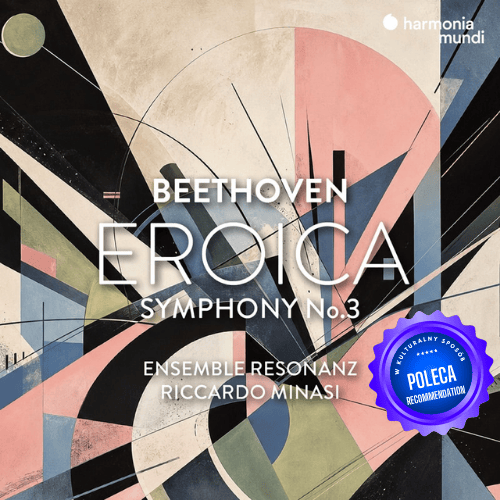
Ludwig van Beethoven: Symphony n°3 „Eroica”
Ensemble Resonanz, Riccardo Minasi (direction)
Harmonia Mundi 2026, HMM902417, TT: 46’27”
(For English, please scroll down)
No i mamy Eroikę, o którą będzie można się pokłócić. I bardzo dobrze. Riccardo Minasi i Ensemble Resonanz nagrali III Symfonię Ludwiga van Beethovena tak, jakby dwustu lat tradycji wykonawczej po prostu nie było. Nie próbują dopisać kolejnej „wzorcowej” wersji do katalogu pełnego wzorcowych wersji. Zamiast tego zrywają z dzieła warstwy interpretacyjnego przyzwyczajenia.
Efekt jest porywający, zaskakujący, chwilami wręcz szokujący. Tempa są szybkie, smyczki potrafią ciąć ostro, instrumenty dęte wdzierają się w fakturę zamiast grzecznie się w nią wtapiać, a skrajne oznaczenia dynamiczne rzeczywiście brzmią skrajnie. Minasi nie łagodzi kantów. Przeciwnie, wyostrza je, wydobywając z partytury napięcia, które przez lata wykonawcza tradycja nauczyła się oswajać. Ensemble Resonanz odpowiada na tę koncepcję fenomenalną energią, a brzmienie zespołu ma zaskakującą masę i siłę.
Nie jest to jednak dyrygencka ekstrawagancja dla samej ekstrawagancji. Za prowokacją stoją partytura, źródła i bardzo konkretna koncepcja przywrócenia Eroice jej destabilizującej nowoczesności. Przez dziesięciolecia próbowano jej sprzeczności wygładzać, korygować, „normalizować”. Minasi wykonuje ruch w przeciwną stronę: pozwala Beethovenowi znów być niewygodnym.
Franz Schubert pisał o beethovenowskiej „ekscentryczności”, która potrafi „doprowadzić ludzi do szaleństwa”. Dwa stulecia później Minasi jakby odpowiadał: skoro tak, pozwólmy jej znowu to robić.
Jednych ta interpretacja zachwyci, innych doprowadzi do furii. Właśnie w tym widzę jej wartość. Minasi ma coś do powiedzenia i mówi to bez półsłówek, konsekwentnie i uczciwie wobec własnego odczytania partytury. Jeśli przy okazji przyjdzie mu płonąć w ogniu krytyki, trudno. A może właśnie o to chodzi? Żebyśmy przestali słuchać Eroiki z nabożnego obowiązku, a znów zaczęli jej słuchać aktywnie.
W parze z interpretacją idzie realizacja dźwięku: bezpieczny dystans zastępują fizyczna obecność, uderzenie i nerw. To Eroica bez znieczulenia. I jedna z tych interpretacji, wobec których naprawdę trudno pozostać obojętnym.
Robert Majewski © 2026
Płyty można posłuchać w serwisie Apple Music.
„Eroica” without Anaesthetic
And so we have an Eroica worth arguing over. All the better for it.
Riccardo Minasi and Ensemble Resonanz have recorded Ludwig van Beethoven’s Third Symphony as though two centuries of performance tradition simply did not exist. They make no attempt to add yet another “reference” recording to a catalogue already crowded with reference recordings. Instead, they strip away the layers of interpretative convention that have accumulated around the work.
The result is exhilarating, surprising and, at times, genuinely shocking. The tempi are fast, the strings can cut with a biting edge, the winds thrust themselves into the texture rather than politely blending into it, and Beethoven’s extreme dynamic markings really do sound extreme. Minasi does nothing to soften the edges. On the contrary, he sharpens them, exposing tensions within the score that generations of performance practice have gradually learned to domesticate. Ensemble Resonanz responds to this conception with phenomenal energy, while the ensemble’s sound possesses astonishing weight and physical force.
Yet this is not a conductor’s extravagance pursued for its own sake. Behind the provocation lie the score, the sources and a very specific interpretative project: to restore to the Eroica something of its original, destabilising modernity. For decades, performers have sought to smooth out its contradictions, correct them, “normalise” them. Minasi moves in precisely the opposite direction. He allows Beethoven to become unsettling again.
Franz Schubert wrote of Beethoven’s “eccentricity”, capable of “driving people mad”. Two centuries later, Minasi seems almost to reply: if that is so, let us allow it to do so once again.
Some listeners will be exhilarated by this interpretation; others will find it infuriating. That, to my mind, is precisely where its value lies. Minasi has something to say, and he says it unequivocally, consistently and with complete integrity towards his own reading of the score. If that means facing the full fire of criticism, so be it. Perhaps that is exactly the point: that we should stop listening to the Eroica out of reverential duty and begin listening to it actively again.
The recorded sound is entirely of a piece with the interpretation: safe distance gives way to physical presence, impact and raw nerve. This is Eroica without anaesthetic. And it is one of those interpretations to which it is genuinely difficult to remain indifferent.
Robert Majewski © 2026
The album is available to listen to on Apple Music.

